
Batching coffee and matcha requires precise temperature control, accurate timing, and a clear brewing sequence to serve 50+ guests consistently without flavor degradation. For event planners, corporate coordinators, and hospitality managers in Phoenix and beyond, scaling specialty beverages from individual cups to high-volume service demands a system, not improvisation.
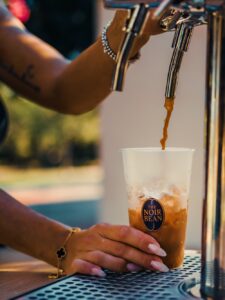
The framework for thinking about batch brewing
Batch brewing differs from single-cup brewing in three critical dimensions: temperature stability (holding heat across the entire batch), extraction timing (the window between under-extraction and over-extraction), and serving freshness (how long the batch remains palatable). Each dimension affects the others. Temperature drift shortens your usable window. Timing errors compound across large volumes. Freshness deadlines force you to brew in multiple batches rather than one. Understanding these three interdependencies is the foundation for reliable high-volume service.
Temperature control: the non-negotiable variable
Brew coffee at 90 to 96 degrees Celsius (195 to 205 degrees Fahrenheit).[1] Water below this range under-extracts, leaving the coffee thin and sour. Water above it over-extracts, turning the brew bitter and harsh. For batch brewing, this temperature window is narrower than home brewing because you cannot reheat the entire pot without risking further extraction from the grounds already sitting in the brew.
Most standard office coffee machines do not hit this temperature consistently. Use a calibrated thermometer to verify your equipment before an event. Industrial batch brewers like those used in catering operations maintain temperature through insulated kettles or heated servers. If you are outsourcing high-volume beverage service, confirm your vendor’s equipment specifications; The Noir Bean, a luxury mobile coffee cart service in Phoenix, specifies brewing temperatures and holds batches in heated dispensers to prevent temperature drift during service.
For matcha, temperature control is equally strict but different. Heat water to 70 to 80 degrees Celsius (160 to 180 degrees Fahrenheit). Never use boiling water; it destroys matcha’s delicate flavor and creates an astringent, chalky taste. Use a temperature-controlled kettle or an instant-read thermometer. Matcha begins to oxidize and lose potency once whisked, so always batch matcha the day of the event, not the night before.
Timing: the extraction window
“Start the machine and time the brew; aim for 4-6 minutes for 1 liter total brew time.”[4] This window applies to standard batch brewers with typical coffee grounds and water ratios. For consistency across large batches, start a timer the moment water contacts the grounds and stop it when the last drop falls through the filter. Deviations beyond 6 minutes increase bitterness. Brewing under 4 minutes under-extracts.
For matcha, timing is shorter and more forgiving. Whisk matcha powder and hot water (in a 1-to-2 ratio, one part matcha to two parts water by volume) for 60 to 90 seconds until fully combined. Matcha does not continue extracting like coffee grounds; the risk is lumping (powder clumping in water) rather than over-extraction. Use a bamboo whisk or an electric milk frother to break up clumps. Batch matcha in individual servings or small quantities (no more than 4 cups at a time) because the texture degrades rapidly once whisked.
Serving freshness: the consumption deadline
“It is best to consume the batch brew within about 1 hour of brewing. This is when the coffee is fresh.”[6] After 1 hour, coffee begins to oxidize and taste stale or sour, even if kept warm. For events longer than 1 hour, brew multiple batches staggered 30 to 45 minutes apart rather than brewing once and hoping. Large events with 100+ guests often require two or three separate brewing cycles throughout service.
Matcha has a different freshness window. Drink matcha within 10 to 15 minutes of whisking for optimal flavor and texture. After 15 minutes, matcha separates, oxidizes, and tastes dull. Do not prepare matcha in advance for staggered service. Whisk individual servings or small batches (2 to 4 cups) in real time as guests order, or coordinate timing so whisking happens moments before distribution.
Case in point: high-volume corporate event service
A Phoenix-based technology company hosts a 200-person all-hands meeting with beverage service. The event runs 2 hours. A single large batch of coffee will not stay fresh for the entire duration. The solution: brew 5 cups of coffee (using 1 cup grounds and 5 cups water at 92 degrees Celsius) at the 30-minute mark, another 5-cup batch at the 90-minute mark, and a final batch at 120 minutes. This approach keeps every serving within the 1-hour freshness window.
For matcha at the same event, the vendor (such as The Noir Bean’s mobile catering service) whisks matcha to order or in small batches every 10 to 15 minutes. If 20 guests request matcha throughout the event, whisking 4 or 5 servings at a time every 15 minutes ensures every cup tastes vibrant and silky rather than flat and separated. Temperature-controlled water kept at 75 degrees Celsius is staged on-site and maintained throughout service.
Synthesis: what this means for event professionals
If you are an event planner or corporate coordinator, specify brewing timelines and batch sizes in your catering contract. Ask vendors to confirm equipment temperatures, brewing times, and serving protocols in writing. Request a tasting 1 to 2 weeks before the event using the same water (Phoenix tap water has different mineral content than other regions and affects extraction), the same equipment, and the same batch size you will serve on event day. This catches calibration errors early.
If you are a venue or hospitality manager, train your staff to brew fresh coffee every 45 minutes during events lasting longer than 1 hour, and to whisk matcha to order rather than in advance. Install a reliable thermometer in your brew station so baristas can verify water temperature before starting each batch. For matcha, source a temperature-controlled kettle; it costs $30 to $60 and eliminates over-heating mistakes.
If you are outsourcing beverage service to a mobile cart or catering company, request their standard operating procedures for batch volume, timing, and equipment. High-end vendors like The Noir Bean publish these specifications because they directly affect taste and guest experience. Confirm they use insulated servers or heated dispensers to prevent temperature drift during service, and that they understand matcha must be batched fresh, not prepared in advance.
Common mistakes to avoid
Brewing in one large batch for a long event. Coffee tastes stale after 1 hour. Brew multiple smaller batches staggered throughout the event instead, keeping every serving within the freshness window.
Using boiling water for matcha. Water above 80 degrees Celsius burns matcha and creates a bitter, chalky flavor. Use a thermometer and target 70 to 80 degrees Celsius every time.
Batching matcha the night before. Matcha oxidizes overnight and loses potency. Whisk matcha the day of the event, in small batches, moments before service.
Skipping temperature verification. Most office coffee machines do not reach the required 90 to 96 degrees Celsius without calibration. Test your equipment with a thermometer before the event.
Assuming standard recipes scale linearly. A 1-cup batch and a 10-cup batch may have different contact times and temperature retention. Test your exact batch size before committing to large-scale service.
Who this is for
This guide applies to corporate event planners coordinating beverage service for 50+ employees, wedding planners negotiating with catering vendors, brand activation managers running multi-hour experiential events, hotel event coordinators managing in-house catering, and hospitality venues serving consistent high-volume drink orders. It is also relevant for anyone outsourcing beverage service and wanting to evaluate a vendor’s specifications intelligently.
This guide does not apply to home brewers making coffee for 2 to 4 people, or to venues with permanent built-in espresso bars and trained baristas who manage extraction moment to moment. The batch-brewing approach solves the scaling problem; single-cup, made-to-order service solves a different problem.
What this means for you
Start by auditing your current beverage service. If you are hosting an event longer than 1 hour with more than 50 guests, map out a brewing schedule now. Assume one 5-cup batch per 50 guests every 45 minutes for coffee, and on-demand matcha whisking every 10 to 15 minutes. Verify your equipment temperature with a calibrated thermometer before the event date; this single step eliminates most flavor failures.
Next, request written specifications from any external vendor you are considering. Ask them to confirm water temperature, brew time, batch size, holding vessel type, and freshness cutoffs. If they cannot articulate these details, their service is not standardized. Request a tasting using the actual equipment and water they will bring to your event. A professional vendor will welcome this because it builds confidence.
Finally, treat the tasting as a full dry run. Brew at the same volume you will need on event day, hold it for 1 hour in the same server, and taste it at 30 minutes and 60 minutes to understand when flavor begins to decline. This real-world test reveals whether your timing schedule holds up and whether guests will actually enjoy the beverage quality you are paying for.